How to Draw a Cornflower
1. Pick a flower and a reference image.
Everyone knows what a flower looks like. But how it looks out in the world is different from how it looks in a still photo. For example, "One thing I've noticed is that often the stem has a bright highlight in photos. But when people draw flower stems, they often draw them as one big, dark line," says Getsinger. Don't trust your memory too much, since factors such as light and shadow can surprise you. That's where reference images come into play.
Whether you draw a peony or a Queen Anne's lace, you'll need to start with a reference photo. But don't stop with just one image. "Consider the different life cycles of the plant, the way it's facing the sun, or how the light is coming into play," says Getsinger. Gather multiple images, so you better understand your subject, but also don't be afraid to create a composition all your own.
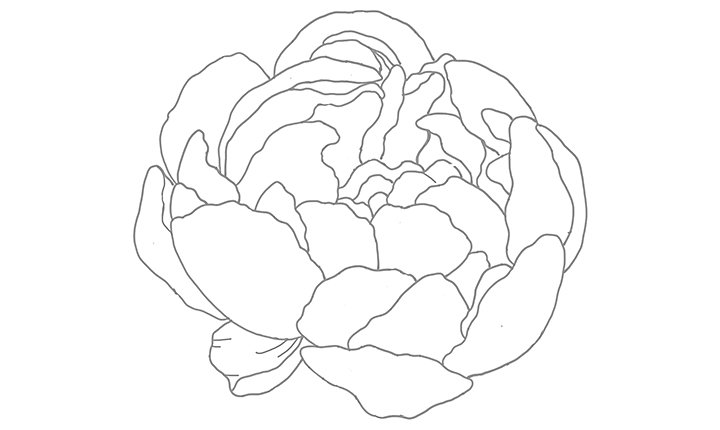
2. Tracing the basic shapes.
When you practice, "trace many types of flowers to learn more about their forms. Start with the major outlines: petals, stems, and leaves," says Lee. "I often start with basic black-and-white line drawings."
Every complex form can be reduced to simple shapes. Examine how the petals look when lying flat, and then observe how they overlap and become foreshortened in your reference image. Don't get bogged down in the specific details at this stage. Just focus on the composition of your image and the organic forms.
3. Hone your linework.
From here you can refine your lines and shapes. Use different line weights to add primary forms and secondary details, and then go in with an eraser to delete unneeded marks from your early sketch. If you're working digitally, like in Adobe Fresco, you can create a new layer and turn off your underdrawing later without erasing it.
"Don't focus too much on making the perfect line. Small jitters and imperfections make the petals seem more natural," notes Lee. Focus on the creases and folds within the petals or the hills and valleys around the edges of the leaves. These details can help add dimension and realism to your drawing.
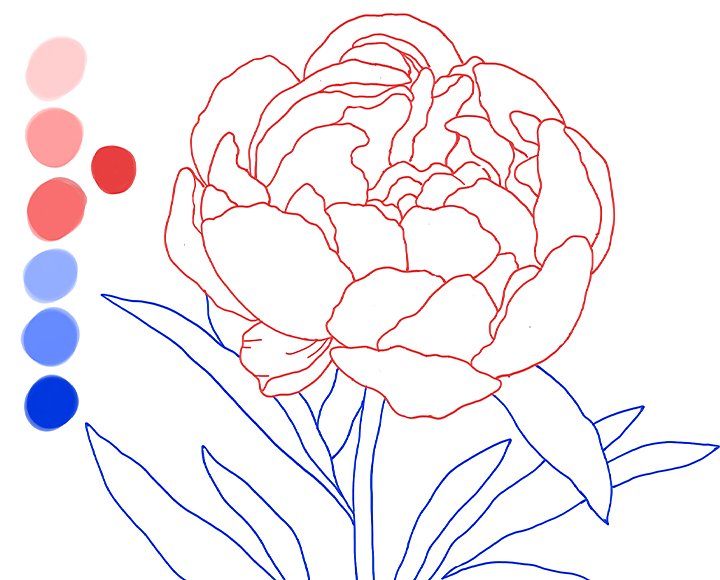
4. Add some simple color.
When it comes to adding color, give yourself a limited palette to begin with. Choose a few main colors for your petals and leaves, and select one or two shades lighter and darker to use for shadows and highlights. Next, block in the main colors. From there you can layer the highlights and shadows across the petals and leaves. When working digitally, keep your colors on a separate layer from your linework. This allows you to add texture and edit colors independently.
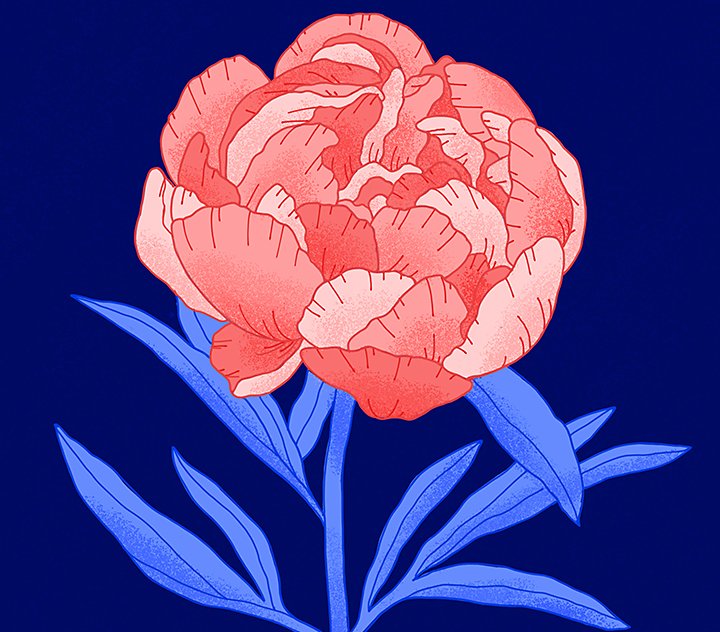
5. Create dimension with texture.
Refer to your reference images and examine how texture and tone make the flower appear three-dimensional. Use textured brushes in Adobe Fresco to create light and dark marks across the top and bottom of the petals. As always, keep your light source in mind when you add detail and shadows.
Get inspired by beautiful flower drawings.
When it comes to flowers, there's no right or wrong way to draw them. Spark a few new drawing ideas by seeing how other artists have captured stunning blooms in their own beautiful drawings.
- Try your hand at a looser approach and explore the world of gestural, watercolor flowers.
- Craft a stylized, abstract form like this artist's unexpected rendition of an iris in bloom.
- Take a different approach and relax your mind with flower doodles reminiscent of mandalas.
Now that you've got drawing tips and inspiration, you're ready to try it for yourself. Adobe Fresco has live brushes that can help add painterly effects to your favorite flower drawings.
spanglerbuourproy.blogspot.com
Source: https://www.adobe.com/creativecloud/illustration/discover/how-to-draw-flowers.html
0 Response to "How to Draw a Cornflower"
Post a Comment